For 100 years, Sarah Lawrence has empowered curious and creative lifelong learners – people who question deeply, imagine boldly, and act with purpose. As we celebrate a century of this transformative education, we honor the timeless values that make us who we are while responding nimbly to the timely opportunities and challenges of a rapidly changing world. Our foundation is strong, our mission endures, and our second century begins with boundless possibility.
Share Your Sarah Lawrence Story
As we reflect on a century of Sarah Lawrence College, we are collecting the stories that bring our values to life—moments of discovery, connection, creativity, and transformation that feel as meaningful today as they did when you experienced them. We invite you to share a timeless story—written, visual, or spoken—from your Sarah Lawrence experience.
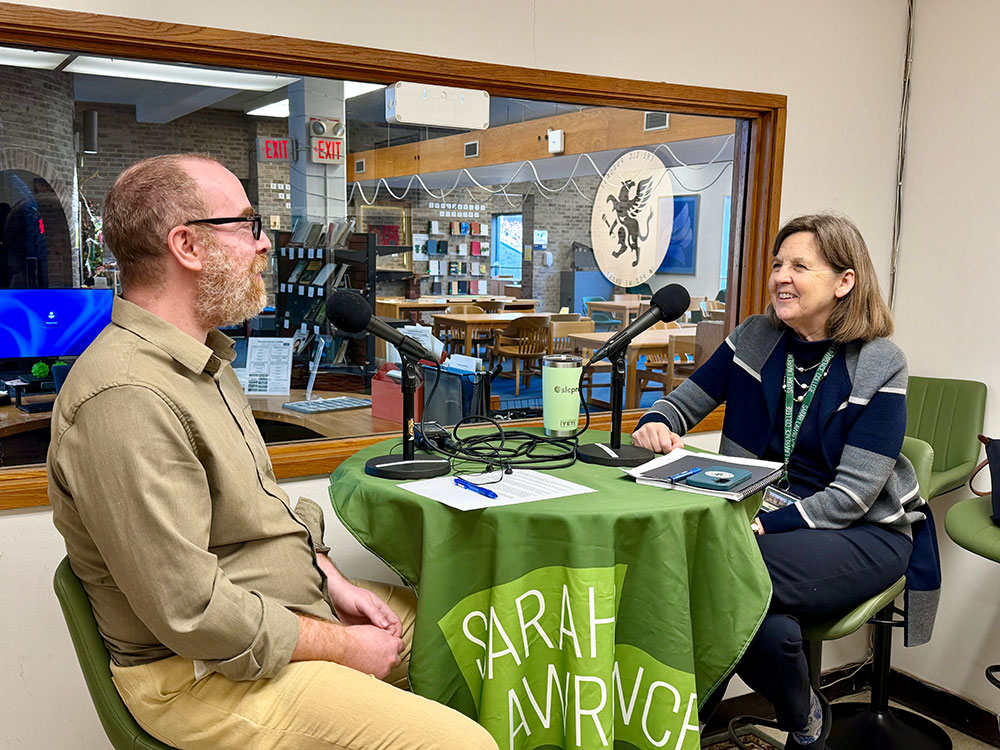
Our Second Century: President Judd on the Sarah Lawrence Podcast
On the January 2026 episode of The Sarah Lawrence Podcast, President Cristle Collins Judd discusses SLC's past, present, and future, sharing her vision for the College's second century.
Sarah Lawrence College Through the Decades
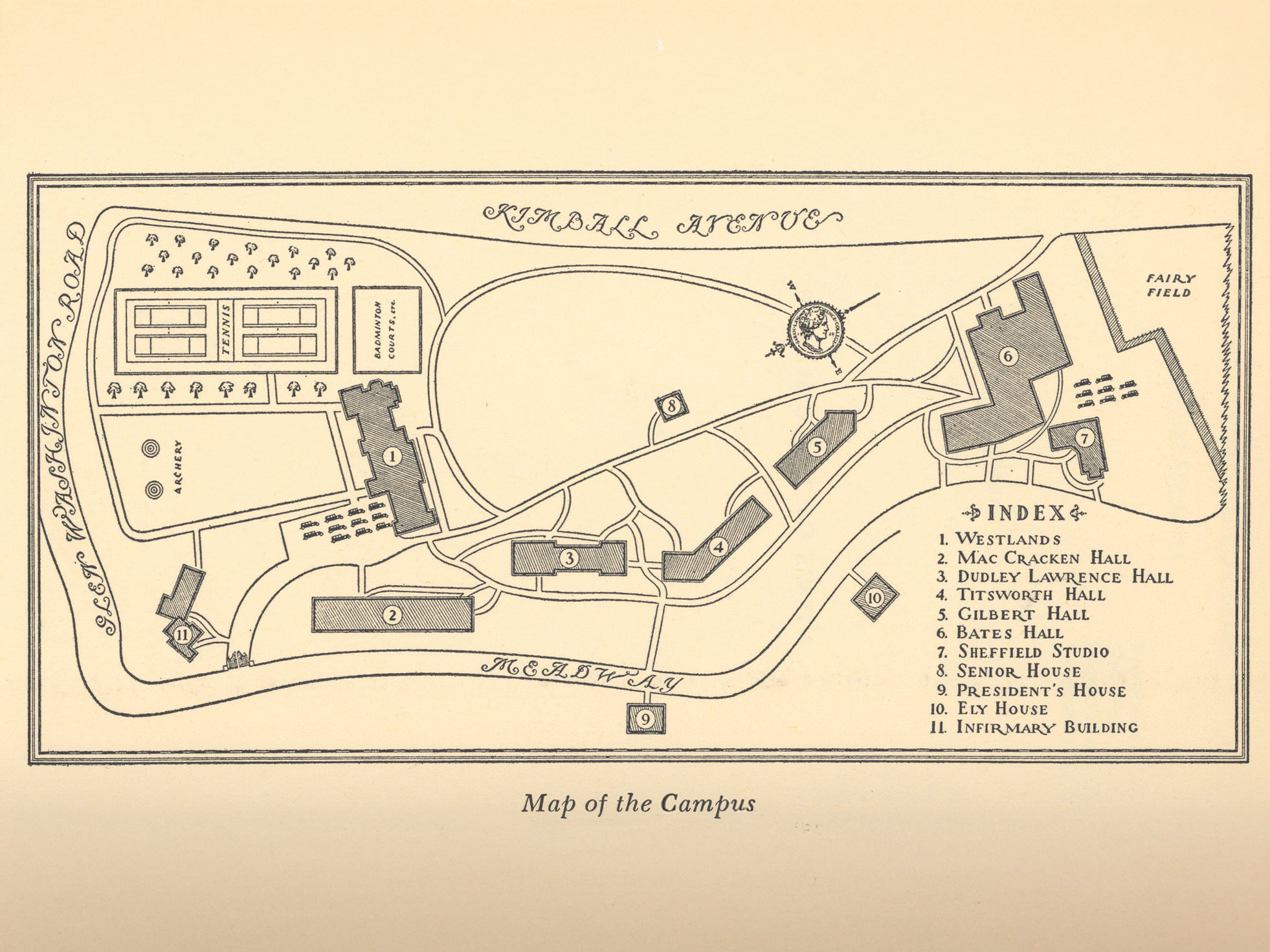
1926-1929: Founding the College
Sarah Lawrence College was founded in 1926 by William Van Duzer Lawrence as a junior college for women, named for his wife Sarah Bates Lawrence. The College received its provisional charter on December 9, 1926, and appointed Marion Coats as its first president. In 1928, Bates Hall and the first dorms were completed, and the College welcomed its first students. Constance Warren became the second president in 1929, and the first commencement was held that same year… with one graduate! During its first decade, the College’s seal, bearing the motto “Wisdom with Understanding”, key governance documents, and its academic foundations were established.
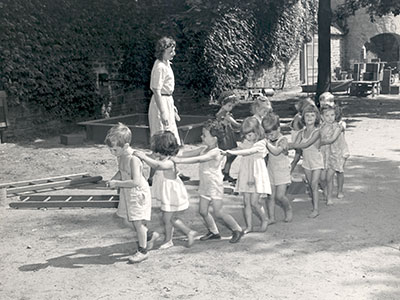
1930-39: Establishing a Pedagogy
In the 1930s, Sarah Lawrence continued shaping its distinctive pedagogy as it grew. The first full graduating class (117 students) finished in 1930, and MacCracken Hall was completed that same year. The College received an absolute charter in 1931, allowing it to grant BA degrees, which it did for the first time in 1933. The campus expanded with the purchase of Robinson (1934) and Andrews (1935) Houses, and the opening of the on-campus Nursery School — today known as the Early Childhood Center — in 1937 established the College’s enduring commitment to lifelong learning.
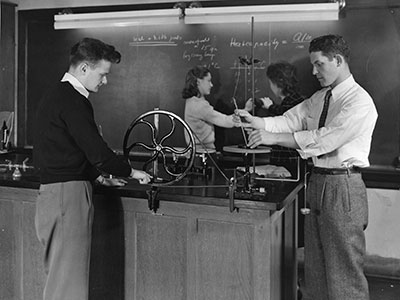
1940-49: The College During Wartime
In the 1940s, World War II shaped life at Sarah Lawrence. In 1942, the College hosted intercultural forums to bring together different racial groups from Westchester County and created a Student War Board to connect students with wartime work and service. Harold Taylor became the third president in 1945. In 1946 the first men were admitted under the G.I. Bill, and a year later the College’s name was changed from Sarah Lawrence College for Women to Sarah Lawrence College. In 1949, the College was granted the authority to offer MA degrees.
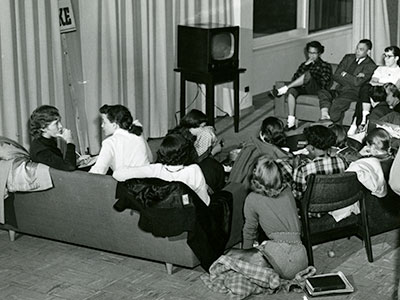
1950-59: Graduate Programs and McCarthyism
In the 1950s, Sarah Lawrence awarded its first MA degrees in 1951, marking growth in graduate programs, and campus expanded with the purchase of Kober House (1951), the construction of the Student Arts Center, designed by architecht Marcel Breuer, the opening of Reisinger Auditorium (1952), and the purchase of The President’s House (1953). In these years, the College stood firm against McCarthyism, reaffirming its commitment to academic freedom.
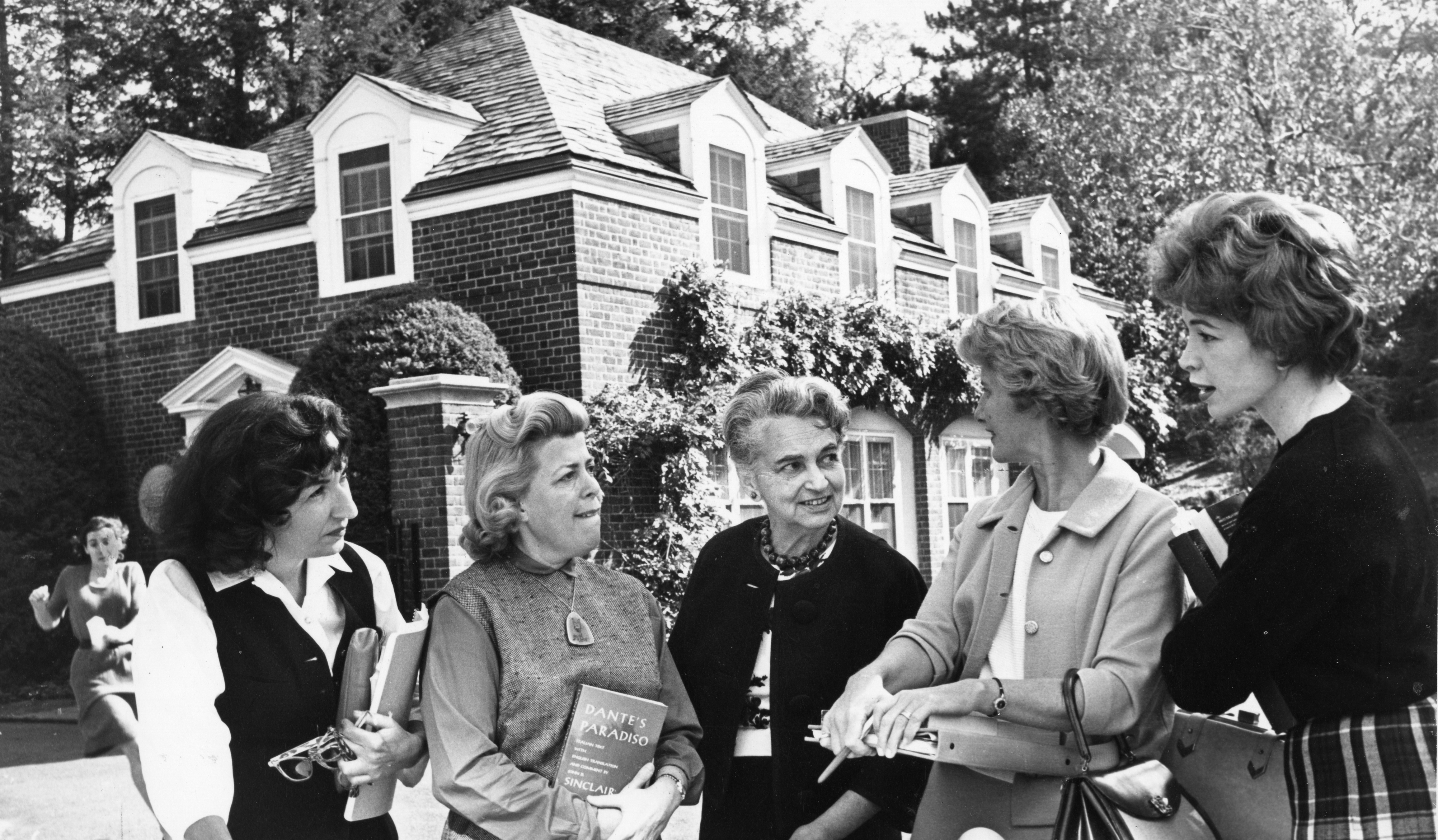
1960-69: Coeducation and Continuing Education
In the 1960s, SLC expanded its mission and physical campus. New dorms (Garrison, Rothschild, and Taylor) were completed in 1961, the North building in 1967, and Mansell, Lynd, Brebner, and Slonim Houses were purchased throughout the decade. In 1962, the College established the Center for Continuing Education, the first full-scale undergraduate program in the U.S. for returning adult students. The College officially became coeducational in 1968. The Human Genetics graduate program was established as the first graduate-level genetic counselor training program in the country in 1969, the same year the College began offering MFA degrees. Presidential transitions occurred throughout the 1960s, with Paul Ward, Esther Raushenbush, and Charles DeCarlo holding the position.
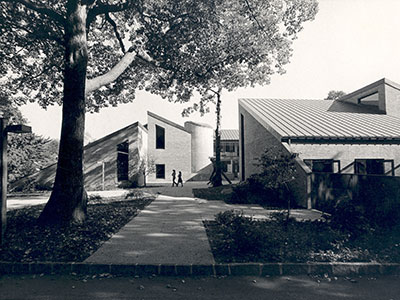
1970-79: Growing the Campus - Curriculum and Grounds
In the 1970s, Sarah Lawrence expanded both its physical campus and its academic offerings. The College purchased Swinford (1970) and Lyles (1971) Houses, and built new spaces such as Andrews Court (1972), the Performing Arts Center (1974), the Esther Raushenbush Library (1974), and Slonim Woods (1976). Graduate programs grew with the establishment of the Child Development (1971) and Women’s History (1972) programs, the latter of which was the first MA of its kind. Students and faculty collaborated to create community-focused arts initiatives, such as Youth Theatre Interactions and the Theatre Outreach program.
1980-89: The Ilchman Years
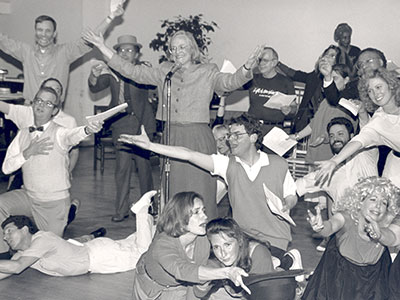
In the 1980s, Alice Stone Ilchman began her 17-year tenure (1981-98) as the eighth president of Sarah Lawrence, guiding the College through institutional growth and academic expansion. The decade saw the creation of two new graduate programs — Health Advocacy (1980) and the Art of Teaching (1985) — and the creation of the Child Development Institute in 1987. Ilja Wachs, a member of the Literature faculty for 57 years, served as Dean of the College from 1980-85, before turning the position over to Barbara Kaplan for 22 years (1985-2007).
1990-99: Building the Science and Sports Centers
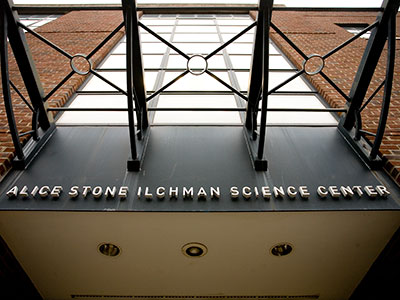
In the 1990s, SLC continued strengthening campus facilities and broadening its community impact. Two major additions to campus were constructed: the Alice Stone Ilchman Science Center in 1994 and the Campbell Sports Center in 1998. Schmidt House was purchased in 1990. The College created the Right-to-Write program, which facilitates writing workshops for incarcerated women, in 1995, and two years later began participating in the Bedford Hills College Program, pairing students with incarcerated individuals working toward a degree. Michele Tolela Myers took the helm as the College's ninth president in 1998.
2000-09: A Home for the Visual Arts
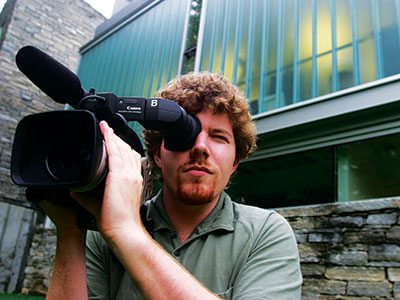
In the early 2000s, Sarah Lawrence turned its attention to creating a dedicated, modern home for the visual and studio arts on campus, and construction of the Heimbold Visual Arts Center was completed in 2004. Residential capacity for undergraduate students grew when Hill House, an apartment building converted into a residence hall, was purchased in 2001. In 2007, Karen R. Lawrence began her 10-year tenure as the College’s 10th president.
2010-19: Moving Forward
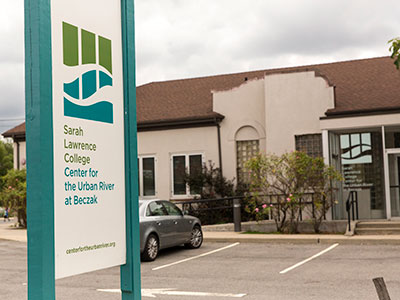
In the 2010s, Sarah Lawrence opened its first off-campus academic research site, the Center for the Urban River at Beczak (2013). Its graduate offerings expanded with the 2012 launch of the MS in Dance/Movement Therapy program. In 2015 SLC kicked off its largest capital campaign, which raised $200 million and concluded in 2019; among its results were the Barbara Walters Campus Center and the Remy Theatre. In 2017, Cristle Collins Judd began her tenure as the College’s 11th — and current — president. In 2019, Sarah Lawrence was awarded a five-year, $1.2 million grant by the Mellon Foundation to advance civic engagement through the arts and humanities in Westchester County.

2020-Present: Into Our Second Century
In 2020, the College successfully navigated the Coronavirus pandemic, led by President Judd’s balanced management of both immediate impacts and long-range planning. In 2021, SLC established transfer partnerships with Westchester Community College and Bronx Community College, aimed at opening the doors of opportunity to more students. Later that year, the College received the largest gift ($20 million) in its history from an anonymous donor, a grant from the Mellon Foundation aimed at addressing the climate crisis and environmental justice through the humanities, and a $1.8 million grant from the Warren Alpert Foundation to increase diversity in genetic counseling. Fall 2022 saw a special visitor to campus: President Joe Biden, the first sitting president to ever visit the College. Building on its legacy of leadership in genetic counseling, in 2022, the College launched the Institute for Genomics Education, Workforce & Leadership and in 2024 partnered with NYU’s Grossman School of Medicine to create a new master’s degree in Genome Health Analysis. In 2024, the Ruth Leff Siegel Center (formerly known as “The Pub” among other things) was renovated and rechristened The HUB, a center for Humanity, Understanding, and Belonging. On the horizon for 2026, as the College celebrates its centennial, is the opening of a new center for experiential learning, which will bring together Career Services, Community Partnerships, SLC EmbeddED, and Global Education to help facilitate students' experiences beyond the classroom and set them on a path for success after graduation.
Coming in 2026: A Center for Experiential Learning
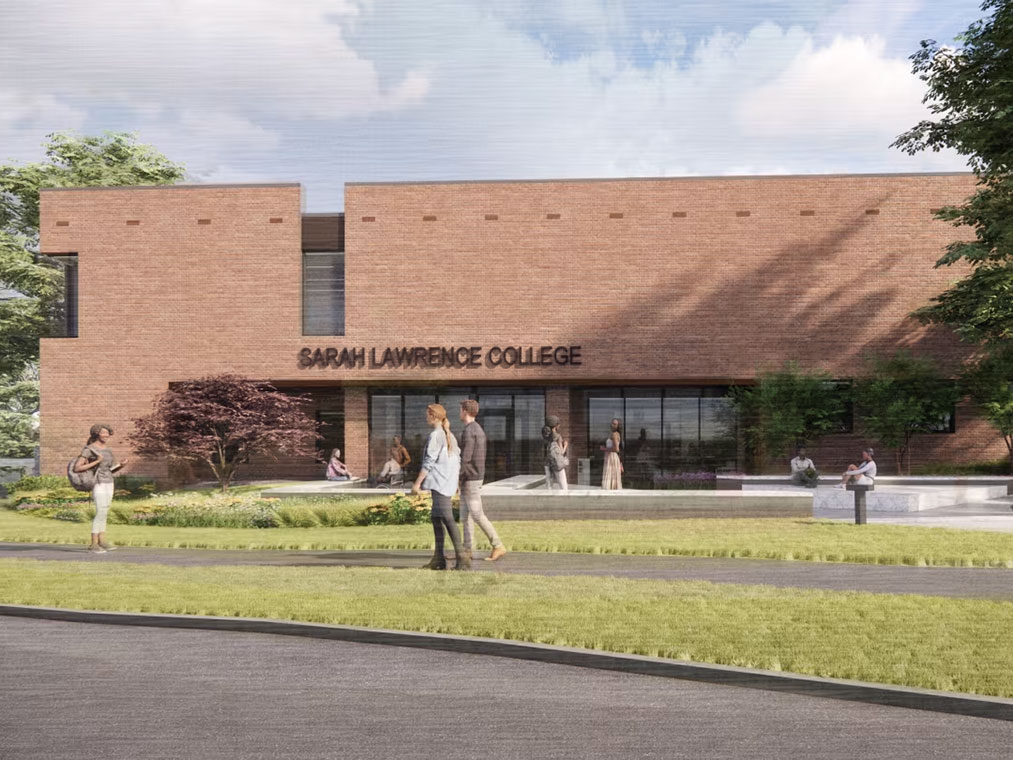
Work is underway on the next major step in the strategic renewal of our beloved campus: the transformation of a presently unused section of the Performing Arts Center into a new center for experiential learning, slated to open in mid-2026.
Our Founders
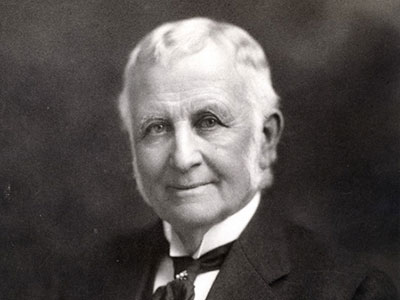
William Van Duzer Lawrence
Born in 1842 on a farm outside Elmira, New York, William Van Duzer Lawrence established Lawrence Park in Bronxville, New York, a housing development that catered to the artistic community, in 1890. In 1908, William donated to the building of a new hospital in Bronxville, named Lawrence Hospital after its benefactor. Upon the death of his wife, Sarah, in 1926, William decided to donate his residence in Bronxville to the establishment of an all-girls junior college. The school was named Sarah Lawrence College in honor of his late wife. William died in 1927, less than a year after the initial founding of Sarah Lawrence College.
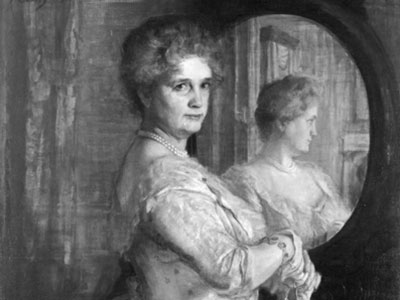
Sarah Bates Lawrence
Born in 1846 in Monroe, Michigan, Sarah Bates Lawrence never pursued a college education, but went on to emphasize the importance of higher education for young women throughout her lifetime. Upon moving to New York with her husband in 1889, Sarah became active in the New York Exchange for Women’s Work, serving on its Board of Managers before becoming president of the organization. In 1916, the Lawrences bought a summer home in Daytona, Florida, where Sarah became actively involved in African American educator Mary McLeod Bethune’s Bethune-Cookman College. Sarah Lawrence died in 1926.
Sarah Lawrence College Firsts
Sarah Lawrence College has long been a pioneer in education. But do you know just how many firsts the College has notched along the way? Here’s a look at some of the policies and programs Sarah Lawrence was first to adopt.
Sarah Lawrence College was the First to...
Adopt the Ideals of a Progressive Education
Sarah Lawrence College (along with Bennington) was the first college to incorporate the ideas and ideals of progressive education into its curriculum. The College was also among the first colleges in the United States to include the arts within its curriculum, underscoring the belief that development of the creative faculties plays a central role in the growth of the individual.
Go Dissection-Optional
Sarah Lawrence was one of the first schools, and is still one of only a few schools, to have an alternative to dissection policy, which allows students to have a choice in whether to dissect or not in their pursuit of knowledge. The policy was enacted as a result of student campaigns.
Establish a Laboratory Pre-School
In 1937, the Early Childhood Center (ECC), one of the earliest laboratory preschools in the country, opened at Sarah Lawrence College. Today, the ECC continues to serve as a fieldwork site for SLC's undergraduate and graduate students, pairing them with preschoolers in a dynamic and nurturing environment.
Bring Education Opportunities to Adult Learners
In 1962, underscoring its commitment to lifelong learning, the College opened its doors to adult women who had not completed their undergraduate degrees when it launched The Center for Continuing Education (CCE). CCE was one of the first programs of its kind and, over the years, served as a model for other institution's programs.
Train Genetic Counselors
In 1969, the Human Genetics Graduate Program was established as the first master's-level genetic counselor training program in the United States. Today, the Joan H. Marks Graduate Program in Human Genetics is the nation's largest such program, and has trained more than half of the country’s genetic counselors.
Grant Master's Degrees in Women's History
In 1972, Sarah Lawrence founded the nation's first graduate program in Women's History, making the College the first to offer a master's degree in the field.
Train Health Advocates
In 1981, the College established the nation's first master's degree program in health advocacy, helping to establish the field of patient advocacy and healthcare reform.
Study Away in Cuba
In 2001, the College created the first semester-long liberal arts study away program in Havana, Cuba. Sarah Lawrence remains one of the only American colleges operating an international program in that country.
Go Green in the Arts
The Heimbold Visual Arts Center, completed in 2004, was the first LEED certified college or university visual arts building. LEED stands for Leadership in Energy & Environmental Design, an internationally recognized green building certification system.
Sarah Lawrence College in Pop Culture

SLC is everywhere!
Kat Stratford knows that Sarah Lawrence is where it’s at, and she’s far from alone. SLC has long held a place in the cultural imagination, appearing again and again in movies, TV shows, and books as a shorthand for creativity, intellectual independence, and thinking beyond convention. Explore Sarah Lawrence’s many moments on screen and on the page.